Marine valve types: gate, globe, butterfly, ball and check, and which to use
A valve is chosen not by bore and price but by the job: is it to isolate or to throttle, how fast, in what medium and under what class oversight. Ordered by eye, to the right flange, it can fail to seal or be simply unfit for the function. Here is a short guide to the types and the limits of where each belongs.
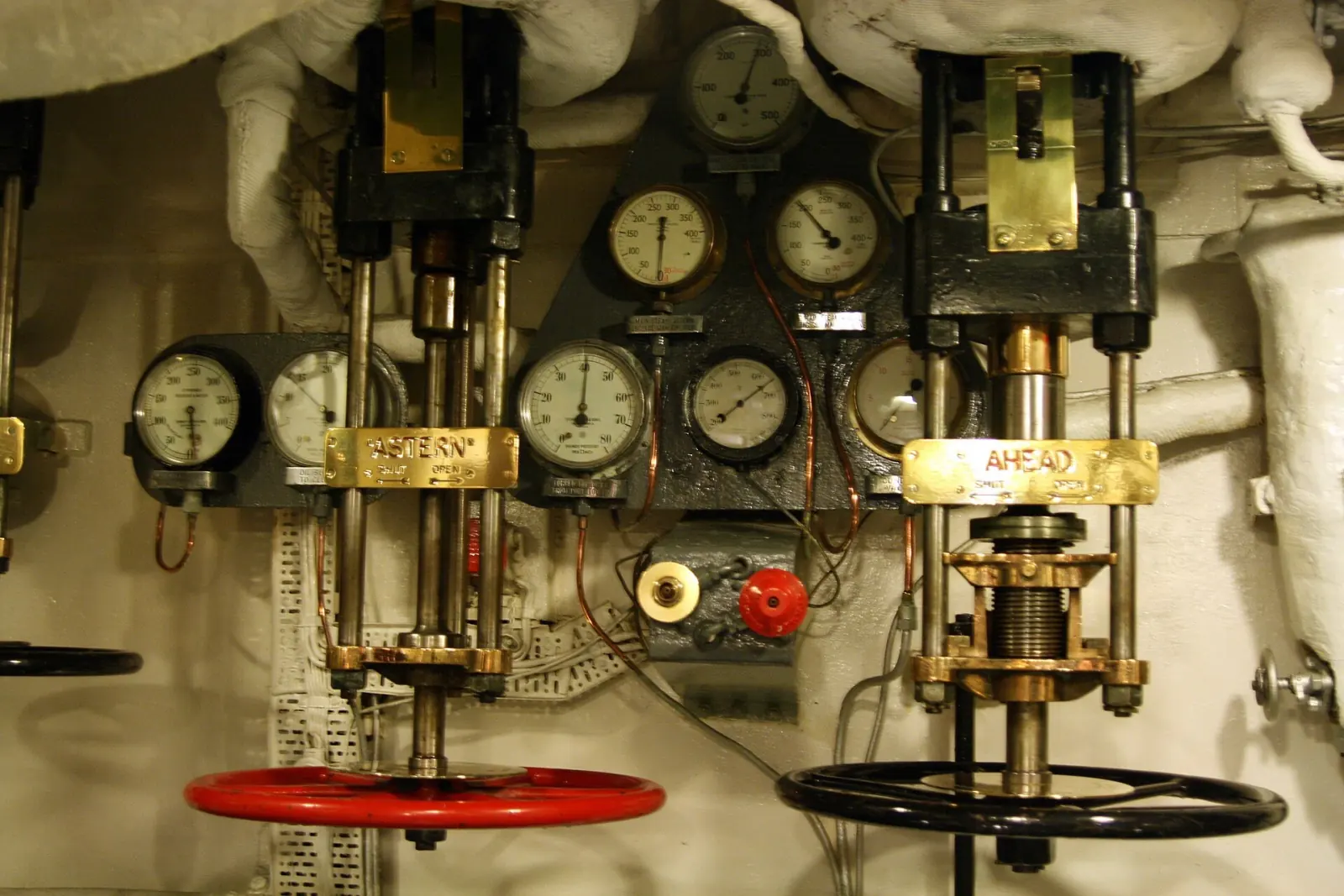
Isolation: gate, ball, butterfly
- Gate valve - full bore, low resistance, for fully open or fully shut. Not for throttling: a wedge held part-open erodes and vibrates.
- Ball valve - quick quarter-turn shut-off, tight, for smaller bores and frequent switching.
- Butterfly valve - light and cheap on large bores, quick quarter-turn; fit for coarse regulation, but at full flow the disc adds resistance.
Regulation and direction: globe and check
- Globe valve - a disc on a seat gives precise regulation and good sealing; higher resistance is the price for controllable flow.
- Check (non-return) valve - passes one way and shuts on reversal. A swing type for steady flow, a lift type for vertical runs and pulsation; it protects pumps and stops ballast or bilge backflow.
- Safety and relief valve - opens at a set pressure; it is not isolation and does not replace it.
The medium picks the material, not habit
Seawater eats ordinary cast iron - here bronzes, dezincification-resistant brasses or stainless steels chosen for chlorides do the work. For fuel, oil and steam it is cast or nodular steel with the right seat. A shell and overboard valve has its own regime: class requires fire-resistant materials and construction on lines passing through the hull. Picking an alloy without checking the medium and temperature is the most common route to a leak after six months.
Pressure, temperature, connection, approval
- The pressure class and temperature range have to cover the operating conditions with margin, not just touch them.
- Connection: a flange to the right standard and class, thread or wafer mounting - it has to match the existing pipework.
- Type approval where class requires it: shell valves, fuel lines, fire-resistant systems, quick-closing valves.
- A material certificate to the grade the function needs - for pressure-bearing and critical valves the practical floor is EN 10204 3.1.
How this works with us
Give us the function, medium, pressure, temperature and connection - or the number of the existing valve - and we match the type, material and class to the job, with approval where class requires it and a certificate to suit the function. Where sealing matters, we quote the gasket set and seat parts too. All from the pumps, valves and hydraulics catalogue.
Got a parts list to price?
Send it over - a binding offer within 24 hours. No obligations, the quote is free.
Send enquiry