Mechanical seal or gland packing? Choosing a marine pump seal
A pump shaft has to be sealed where it leaves the casing, and the choice is essentially binary: soft gland packing or a mechanical seal. It is not a matter of fashion but of the medium, the leakage you can allow and how clean your sealing water is. Here is what the difference is and when each type pays.
Gland packing: simple, forgiving, meant to drip
Soft packing rings are compressed by a gland around the shaft or a protective sleeve. Packing is meant to drip a little - that leakage cools and lubricates the braid. Nipped up dry it overheats and scores the sleeve. Its strength is tolerance: it takes slight shaft run-out, dirty water and intermittent duty, and it is replaced in place, cheaply, without pulling the pump. The price is a constant leak, attention, and wear of the shaft sleeve, which is renewed periodically.
Mechanical seal: dry, but demanding
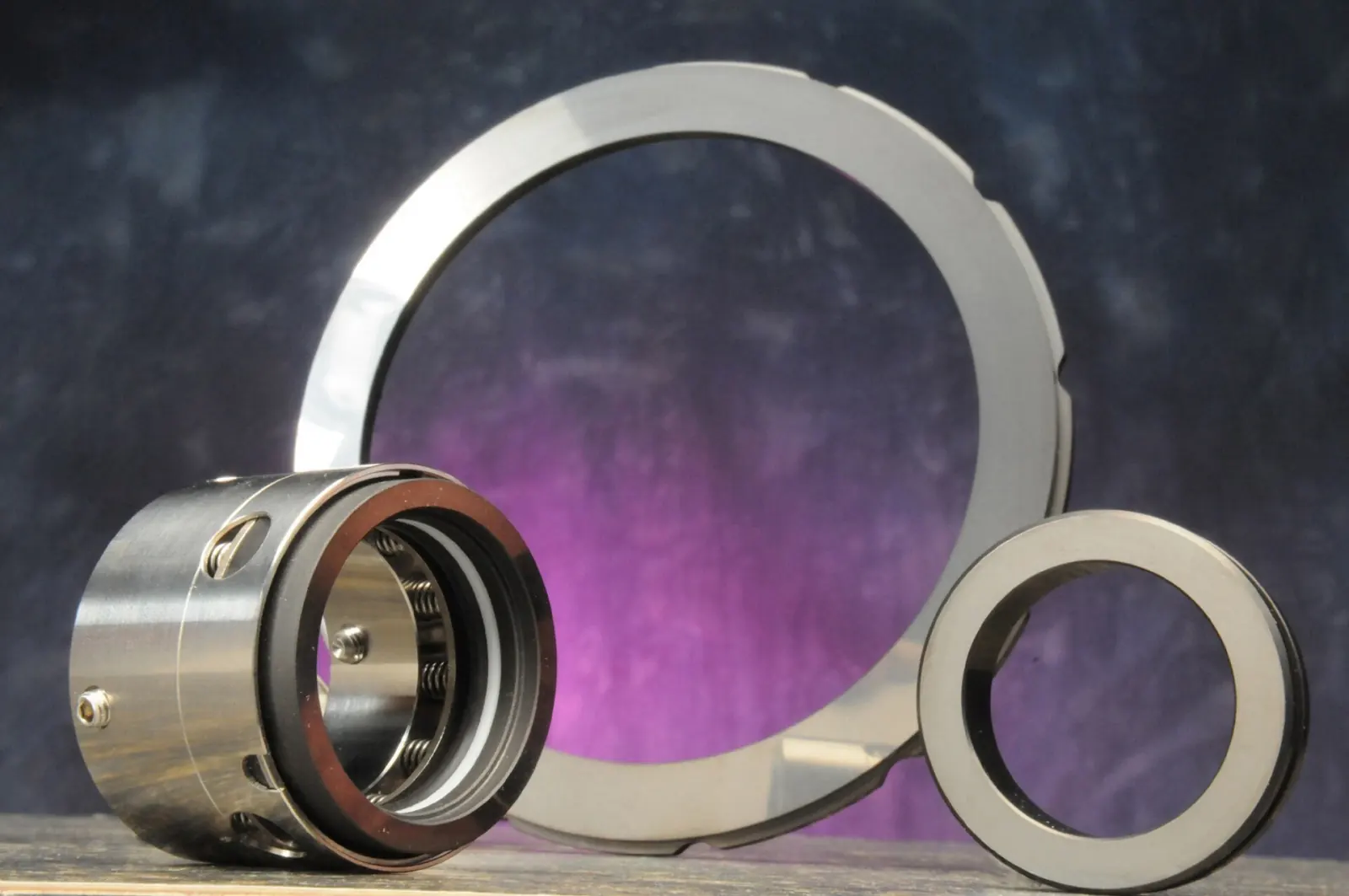
A mechanical seal is a pair of smooth rings - one rotating, one static - pressed face to face, with leakage near zero. It runs clean and needs no daily adjustment, but it is less forgiving: it wants a clean liquid between the faces, will not take dry running or excess shaft run-out, and a change usually means stripping the pump. A cartridge version cuts that downtime, because it comes factory-set and fits as a unit.
Which goes where
- Gland packing: seawater, ballast, bilge and fire pumps - a dirty or gritty medium where tolerance matters more than cleanliness.
- Mechanical seal: fuel, oil, toxic, hot or volatile media, where leakage is unacceptable or dangerous and the sealing water is clean.
- Balanced and double seals where pressure is high or the medium hazardous - double with a barrier liquid where any leak to the machinery space is ruled out.
Do not swap one for the other lightly
Converting from packing to a mechanical seal is often a good idea - less attention, no leak - but it needs a check of shaft run-out and condition, a supply of clean sealing liquid and sometimes a sleeve of a different size. The reverse too: dropping packing in where a cartridge was is a return to a constant leak, which on fuel or oil is unacceptable. The choice starts from the pump datasheet and the medium, not from what happens to be in the store.
How this works with us
Give us the pump maker and type, the medium and the shaft diameter or the number of the existing seal, and we match packing, a mechanical seal or a cartridge to the job, together with the shaft sleeve and O-ring set. Where a change of type makes sense, we say plainly what else it needs. All from the pumps, valves and hydraulics catalogue.
Got a parts list to price?
Send it over - a binding offer within 24 hours. No obligations, the quote is free.
Send enquiry