Wire rope inspection: discard criteria under ISO 4309
A wire rope does not part without warning - it warns for weeks with broken wires, diameter loss and the discolouration of corrosion. ISO 4309 turns those symptoms into numbers at which the rope is discarded before it lets go under load. For cranes and winches that is not advice, it is the basis of safe operation. Here is what to look for.
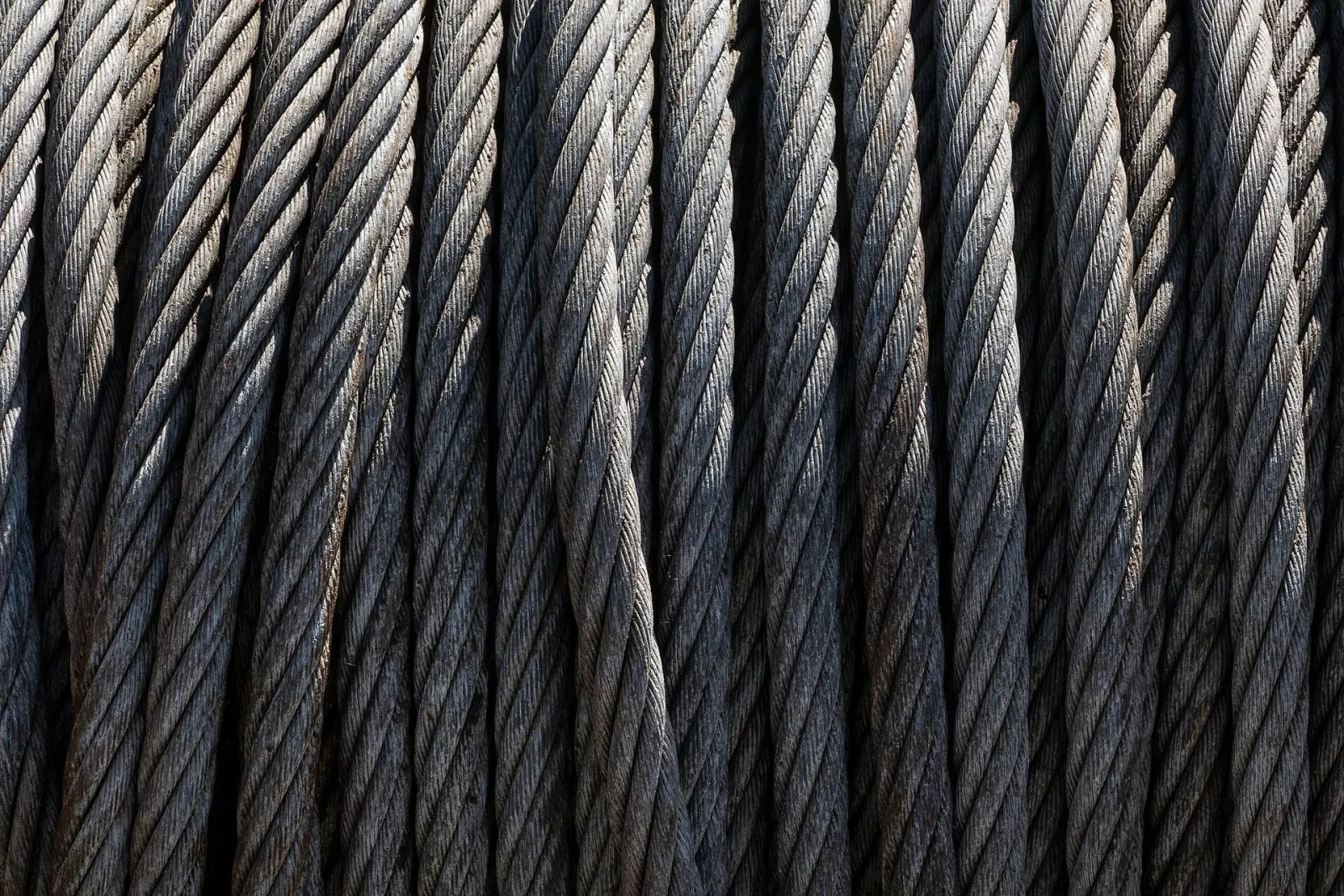
Broken wires are counted over a length
The main criterion is the number of visible broken wires over a defined length of rope - usually counted over six and thirty rope diameters. The allowable number depends on the rope construction and the equipment class, so it is read from the ISO 4309 tables, not from memory. Broken wires clustered in one place, or breaks at a swaged termination, are more dangerous than the same wires spread evenly - and are often a separate discard criterion.
Diameter loss betrays the core
Measure the rope diameter in several places and compare with nominal. A clear reduction means wear of the outer wires, destruction of the core or its collapse - the rope goes thinner and loses capacity despite no crop of surface breaks. It is the measurement that catches wear invisible from outside, which is why the calliper is part of the inspection as much as the eye.
Corrosion, deformation and mechanical damage
- External and internal corrosion: bloom, pitting and a dry, rusted core weaken the rope regardless of broken wires.
- Deformations: birdcaging, core protrusion, loops, kinks, flattening and twist - most of these are an immediate discard.
- Abrasive wear at sheaves and drum and heat damage (glazing, discolouration) - they count toward the overall condition assessment.
Inspection, records and a competent person
Load-bearing ropes get routine visual checks and a periodic thorough examination by a competent person, with the condition and decision recorded. It is that record, not the bosun s memory, that lets you track the progress of wear and change the rope on plan. When you renew, match the rope for construction, strength grade, lay direction and core type - a rope of the same diameter but a different build spools and wears differently. End terminations (swages, poured sockets, grips) have to suit the fittings and carry their own certificates.
How this works with us
Give us the rope diameter, construction and grade and the type of equipment, or the data from the last certificate, and we match the rope and terminations exactly to the application, with a breaking-load certificate for the crane records. We keep common deck and mooring ropes easy to reorder against your list, so a worn one is changed on schedule, not after an event. All from the deck equipment catalogue.
Got a parts list to price?
Send it over - a binding offer within 24 hours. No obligations, the quote is free.
Send enquiry