Marine turbocharger overhaul intervals and what to keep in stock
The turbocharger is the single hardest-worked component in the engine room: it spins near 20,000 rpm in exhaust gas at 400-500 degrees. It runs for years without anyone opening it, until suddenly it does not. Whether that ends as a planned overhaul or a failure on watch comes down to a few numbers from the manual and a handful of parts on the shelf. Here is which ones.
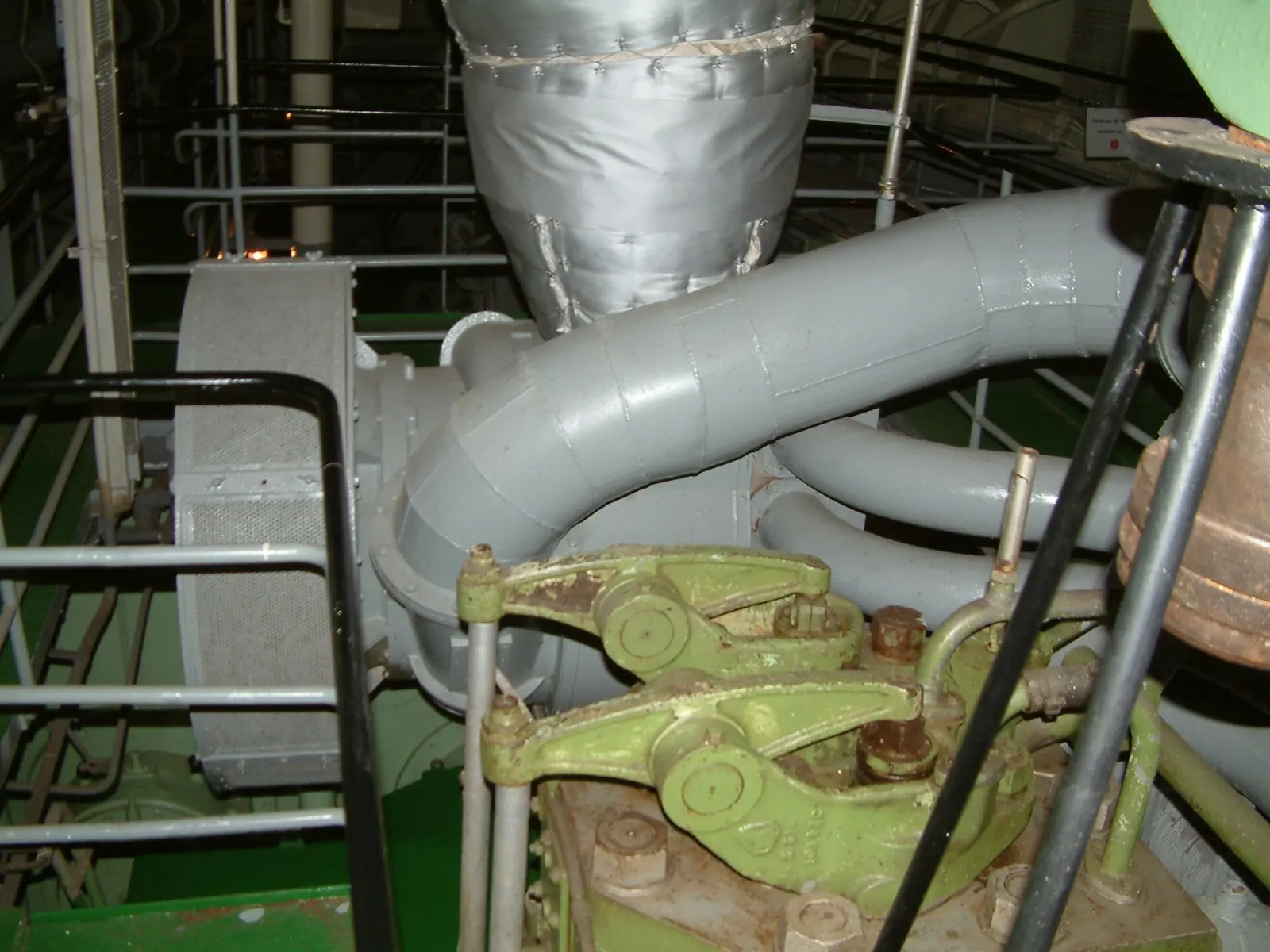
Cleaning is not an overhaul
Regular turbine-side water washing and dry-cleaning the compressor keep efficiency up, but they do not reset the clock. They are operational tasks, not an overhaul, and they do not replace a bearing and clearance check. A turbo you wash diligently still reaches its strip-down interval; the washing only means it arrives there in good shape.
Intervals are counted in running hours
- A full strip-down with bearing renewal and rotor inspection: makers quote figures in the region of 16,000-24,000 running hours, but it depends on the type, the fuel and the operating profile.
- An intermediate bearing and axial-clearance check usually falls at about half that.
- Residual fuel, high sulphur, frequent manoeuvring and long spells at low load all shorten each of those intervals - the manual figure is a starting point, not a guarantee.
Rolling or plain bearings - two stocking models
Newer and smaller turbos run on exchangeable rolling-bearing cartridges with a fixed hours life: you swap the cartridge and send the old one for refurbishment. Large units run on plain journal and thrust bearings serviced in place. That changes what you hold - a ready cartridge, or a set of bearings with seals. Establish which model you have before you place an order for bearings.
What actually gets ordered
- A bearing set or bearing cartridge for the type and serial number - the most common item.
- Sealing rings and labyrinth O-rings: cheap, and without them the strip-down is pointless.
- The nozzle ring and shrouds if exhaust erosion has eaten into them.
- The air filter element and intake silencer - pure consumables.
- The rotor as a long-lead item where the type is rare or the ship trades far from service.
Symptoms you do not wait out
- A widening spread of exhaust temperatures between cylinders, or a drop in scavenge-air pressure.
- Surging - the audible choking of the compressor as load changes.
- Unusual noise or vibration, oil traces in the casing, a run-down that lasts longer or shorter than usual.
- Any one of these is a signal to look now, not at the next port.
How this works with us
Give us the maker, type and serial of the turbocharger - ABB, MET, Napier, KBB, PBS - and we match bearings or a cartridge and the full seal set to the exact variant, with certificates, and flag the items worth keeping aboard for your trade. It drops straight into the engine and propulsion catalogue and the quote, with the OEM and approved-replacement lead times side by side.
Got a parts list to price?
Send it over - a binding offer within 24 hours. No obligations, the quote is free.
Send enquiry